Small Places, Big Changes - How the Smallest Village on Shikoku Island Became Japan’s Symbol for Sustainability
By Linda Ding - Co-Founder of INOW
A Village: Zero Waste In The Community
They say it takes a village to raise a child, and they may be right. Ask any harried, stressed out parents if they wouldn’t love to have some extra hands around to help out, someone to whom they can delegate tasks to when life gets overwhelming. After all, on our own we can all do hard things, but when we have the support of the people around us, the hard things may suddenly not seem so difficult.
When it comes to the village of Kamikatsu, visitors always want to know the same thing when they come to visit - How did an entire village adapt a system of zero waste? What is the secret ingredient that allows for such a unique waste separation method to be implemented across an entire population? The answer to this question may come as a testament to Kamikatsu’s effort together as a community.
To begin, Kamikatsu’s zero waste system started out as a “top-down” initiative. Officially implemented by the village’s town government, residents initially did not have a choice in how the municipality chose to dispose of their waste. But simply creating a new law was not enough to make the system successful. Even today, there are no penalties in place to punish residents if they do not separate their waste correctly. So how does the town government ensure that residents will abide by the separation categories?
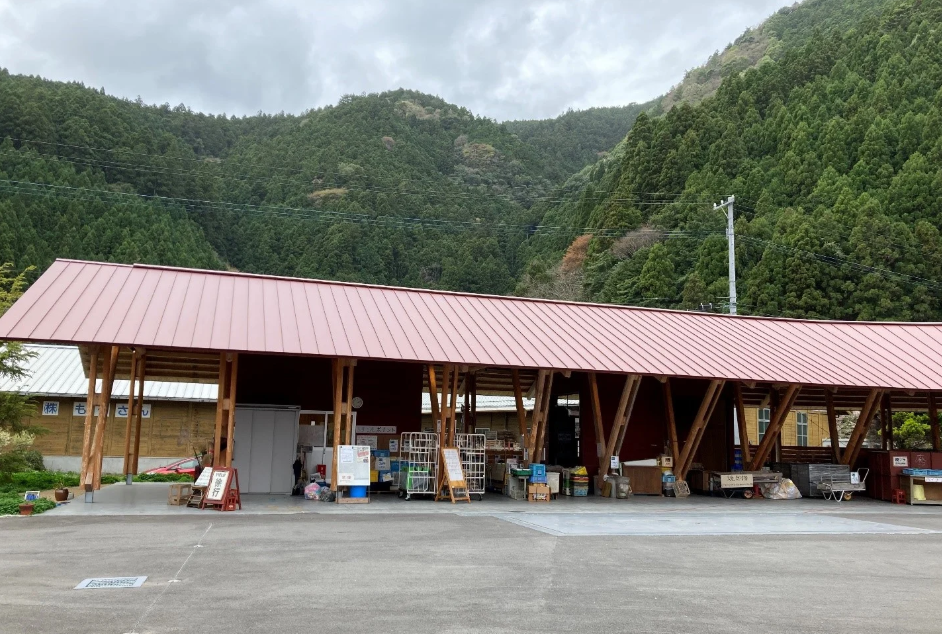
A key feature of the zero waste system is the creation of a central separation centre. The Gomi Station, as it is called, serves as a focal point in the village. Since there is no municipal garbage pickup, the residents need to bring their own waste to the gomi station by themselves, making it a place where most residents will visit quite regularly. This might sound like a chore at first, but a surprising opposite effect has taken place.
Given that in society nowadays an epidemic of loneliness is becoming quite common, especially amongst the elderly, who see their children moving out, often to live separately in cities far away. This is a problem also seen in Kamikatsu, which has the added obstacle of possessing a very mountainous terrain, making gathering not an easy task amongst the residents. Yet due to the necessity for all residents to visit the gomi station to dispose of their waste, over time this functional service has morphed into a de facto community center, a place of impromptu gatherings for the locals.
The gomi station is run by full time staff who themselves are local residents. Staff members are there to answer questions, helping to guide residents into separating correctly. If they notice that someone is not quite separating correctly, they will gently correct them. And when this advice is coming from a neighbour or someone you know, the impact often leads to better separation in the future. It is often said that knowing you will see a familiar and friendly face is part of what makes going to the gomi station something enjoyable as a social event, beyond just the simple chore of waste disposal.
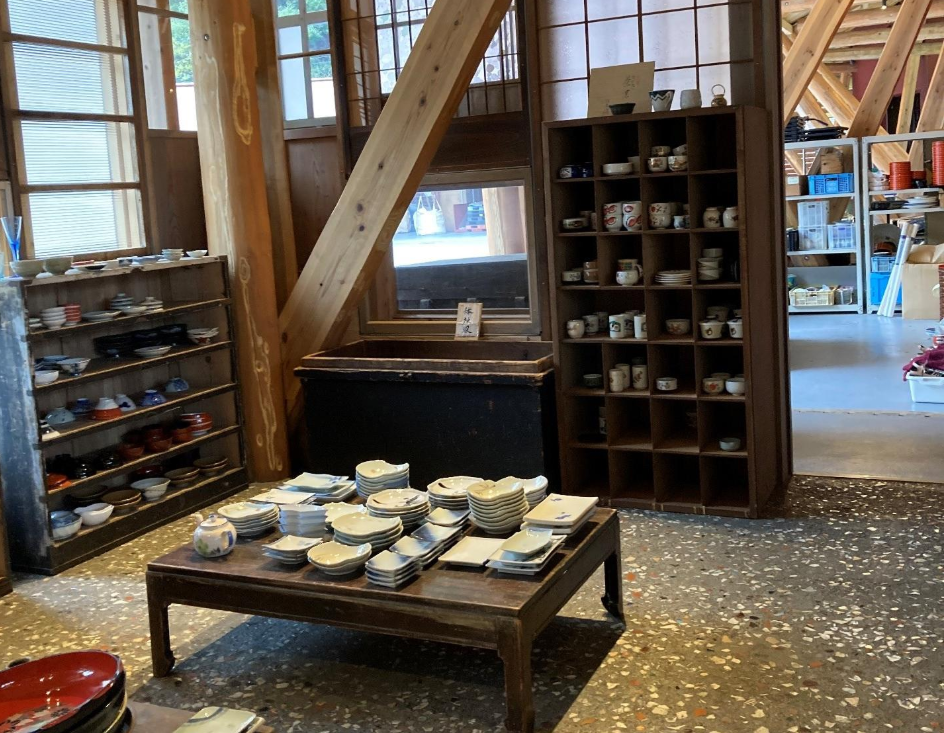
At the gomi station you will find another key feature of Kamikatsu’s zero waste system. The Kuru Kuru shop, located next to the separation center, is a reuse store that is open to accepting any still usable item from the residents. Although only Kamikatsu residents can leave their items behind, anyone - whether locals or visitors - are able to take out anything they like from the store, free of charge. Whether you are looking for new tableware, batteries, books or clothing, you can almost always find it inside the Kuru Kuru shop. It is not uncommon to hear Kamikatsu residents suggesting to each other to check the Kuru Kuru shop, whenever someone mentions there is an item they are in need of. It is truly a system that embodies the saying “one man’s trash is another man’s treasure.”
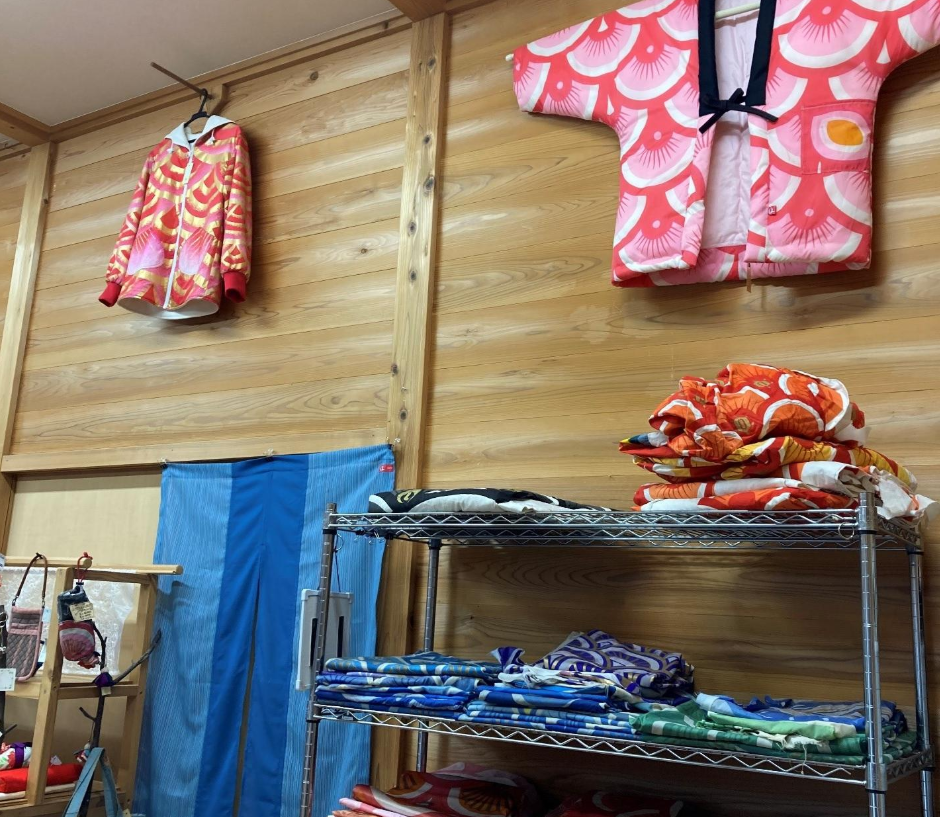
Another zero waste initiative that focuses on the theme of reuse is found in the Hidamari Craft Center. Here old kimonos, clothing, and discarded fabrics, such as old carp streamers usually hung up for the Children’s Day festivities, are taken in and reworked. The center is run mostly by local grannies hired to upcycle the fabrics, making them into new crafts for sale and turning out such inspiring creations as handbags, jackets, and children’s toys. For the young craftsmen wanting to learn a new skill, it is also possible to take workshops at the center and learn how to weave on Saori looms.
Although the main focus of zero waste in Kamikatsu has been upon recycling waste to divert it from landfill, other initiatives within the village focus on the reduction of waste produced in the first place. The Zero Waste Academy, the NPO in Kamikatsu focusing on education about waste reduction, lends out reusable tableware, free of charge, to supply the village during festivals and events in order to reduce the reliance upon single-use containers, plates and cups. In the year 2019 alone, approximately 7,915 pieces of tableware were lent out, significantly reducing the amount of burnable plastic usually generated by these types of events.
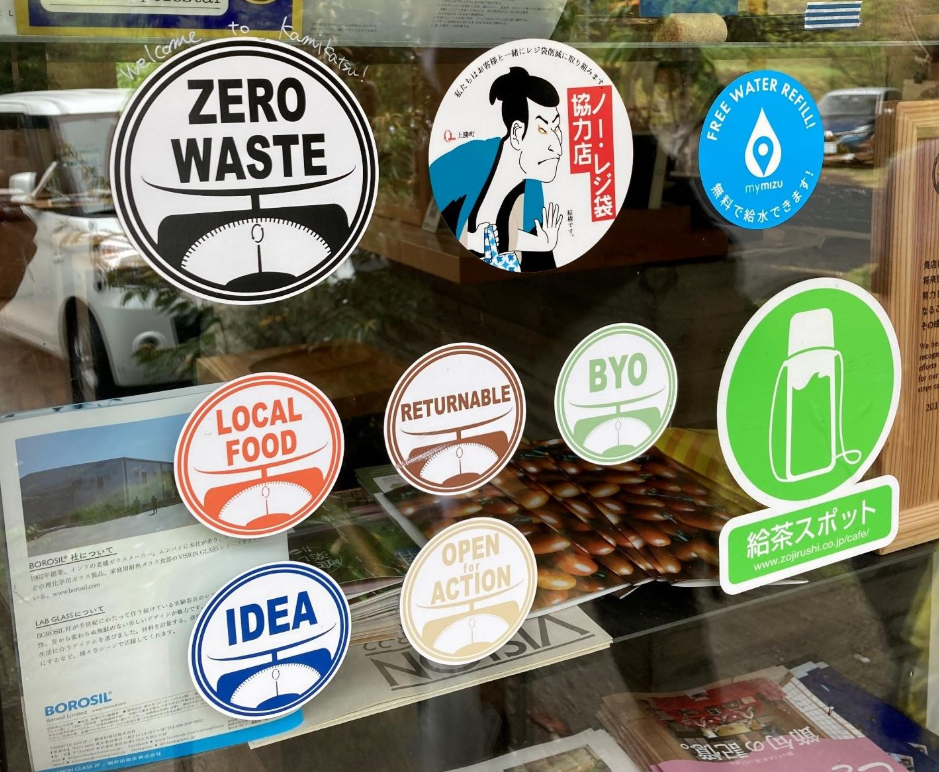
Another initiative led by the Zero Waste Academy began in 2016, when in an effort to heighten the awareness of zero waste amongst businesses and to help customers reward businesses with a strong zero waste consciousness, the Zero Waste Accreditation System was created. The system works in particular with food and beverage establishments, aiming to certify them for their specific actions taken to reduce waste. Stores can get accreditation for using environmentally-friendly products, purchasing ingredients locally, encouraging customers to bring their own takeaway containers and many more. The idea is to use this system to create higher visibility for businesses practicing zero waste concepts, and to encourage more businesses to follow in the same footsteps. By building and sharing best practices, Kamikatsu hopes to spread the message of zero waste from one community to the next, until the message can be received globally.
With the world in its current global climate crisis, the impetus often seems to be put on individuals to take action in order to make a difference. Stores all over Japan are imposing a (most nominal) fee for providing plastic shopping bags, putting the responsibility on the consumer to decide whether or not they want to “purchase” such an item. And in campaign after campaign, consumers are reminded of their individual responsibilities to not use plastic products, to buy eco, to support sustainability. But in our globalized world economies, people are no longer an island unto themselves.
The world is increasingly becoming intertwined, interconnected. And climate change is not the individual’s problem, but a problem for all of us. If we look to Kamikatsu as an example, the only way a successful zero waste system could be implemented was through the efforts of not just a few individuals, but the collaboration of a community as a whole. Perhaps the answer to solving this global crisis is to pretend it is the child for whom our collective global village needs to come together, to raise, and address.