Small Places, Big Changes - How the Smallest Village on Shikoku Island Became Japan’s Symbol for Sustainability
By Linda Ding - Co-Founder of INOW
From A Small Mountain Village, An Idea That Sparked The World
Where do big ideas come from? How does change come about, those sparks that ignite new movements, shifting the way we think about the world as we know it? It is common to learn of such moments occuring in the big cities, those densely populated hotbeds for new thought. But from time to time, such strikes of inspiration can take place where you least expect it.
As the smallest village on all of Shikoku island, Kamikatsu, with its current population of 1500 people, is one of the few places in Japan where you won’t find a combini. At its peak the village, which once supported a thriving forestry economy, had a population of about 6000 inhabitants. But when the Japanese domestic lumber industry became undercut by cheaper imports, many locals left the village in search of jobs in the nearby cities. Very soon, as is commonly seen in the countryside all over Japan, Kamikatsu became depopulated and is continuing to do so.
How to save a dying village? This was a question Hitomi Azuma, a member of Kamikatsu’s town government, was asking herself. A Kamikatsu native, Azuma-san was not satisfied to simply let her hometown disappear. Around the same time, the town office was also dealing with the dilemma of how to dispose of the town’s garbage. Traditionally, Kamikatsu’s garbage system was simply open incineration. A big hole dug in the ground in the village’s center served as an “open dumping” grounds, where residents would throw their garbage in and it would be incinerated altogether. Suffice to say this was neither good for human health nor for the surrounding environment.
The town’s answer to the problem of open incineration was to purchase two small incinerators of their own. But only two years after their induction, the national government of Japan changed their policy on the amount of dioxins permitted to be emitted during waste management. This meant that Kamikatsu’s incinerators had to be shut down. Without them, Kamikatsu’s town government suddenly found themselves needing to rethink their entire waste management system. A new method for disposal was needed. And fast. It was at this critical moment, at the crossroads of what will become Kamikatsu’s waste management system in the future, that Azuma-san had an idea.
She suggested that in order to reduce waste, and therefore alleviating costs of waste removal from Kamikatsu, residents should separate out recyclable materials from their waste in as much detail as possible. The village would contract out the materials to different companies who were capable of recycling them, thus redirecting these materials out of landfills. Her idea was met with some pushback at first, but eventually it got the approval from the village mayor. Thus, in 2001, Zero Waste in Kamikatsu was officially begun.
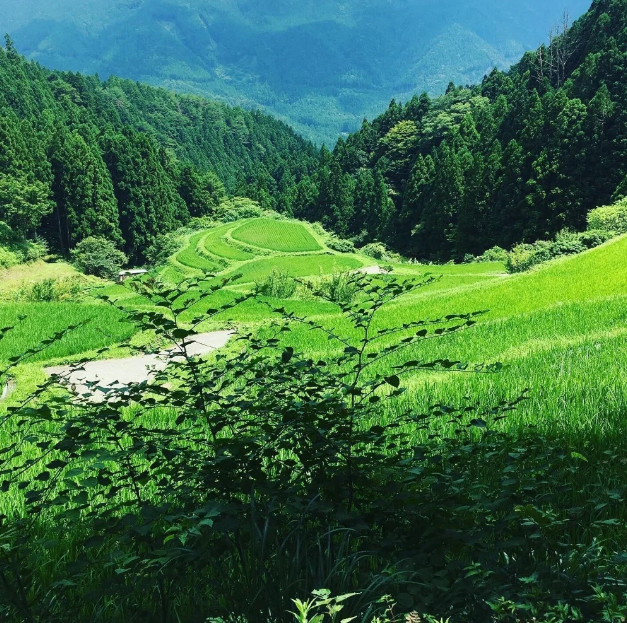
An initial challenge facing the town office staff in implementing Zero Waste was how to educate the residents about this new system. When it first started, Kamikatsu’s Zero Waste system had 35 categories of waste separation. It took the town office one month’s time, sending out teams of staff and volunteers to visit every single settlement within Kamikatsu in order to educate the local residents. This is much easier said than done, for despite the depopulated nature of the village, Kamikatsu is quite large in landmass and is made up of fifty-five different settlements, with 85.4% of it as forests and almost no flat land. Despite the many challenges, through the hard work and dedication of the town’s people, Zero Waste was able to be successfully implemented in Kamikatsu.
Even though 35 categories of waste separation is already a staggering achievement, Azuma-san was not wholly satisfied. She knew that Kamikatsu could be doing more around the theme of zero waste, to become an example of what can happen when an entire town makes an effort to become more sustainable. As such, in 2003, the Kamikatsu Municipal Assembly adopted the Zero Waste Declaration, aiming to make Kamikatsu the first village in Japan to divert 100% of their waste from landfill by the year 2020.
Such a lofty goal was set to also serve a secondary purpose. By branding Kamikatsu as the “zero waste village,” it gave the depopulating town a new identity. Locals from Kamikatsu could be proud to tell others they are from Kamikatsu, and people from outside will want to visit the village in order to learn about zero waste for themselves. This was Azuma-san’s dream - to keep Kamikatsu from disappearing.
Back in the present day, Kamikatsu’s Zero Waste system has grown from 35 to 45 categories of waste separation. A quick search on YouTube will bring up videos, watched millions of times, applauding the village for being an example of sustainability in Japan. Kamikatsu has now been featured in the likes of The New York Times, World Economic Forum, TedTalks, and Bloomberg just to name a few. Every year there are more tourists who come to visit the village than villagers themselves. All of this, from one humble idea that was offered when faced with the problem of - what do we do with all of our garbage?
Of course the system is not perfect. It is still evolving, just as the problems in our present day have evolved. The 2020 year mark came and went, and the village was not successful in meeting their 100% garbage free goal, by about 20%. The population of the village is now over 50% made up of elderly residents over the age of sixty-five. This means that some villagers find transporting their own waste to the separation center difficult or impossible to do. It is also not always easy for residents to separate their waste into the proper categories either. These problems especially will continue to grow as more of the population becomes elderly in the coming years. But innovation does not strike once, and is then meant to last forever. New ideas will formulate, and need to be adapted and implemented with the times. Kamikatsu’s system, having now sustained a twenty year history, is due, too, for a revival.
But what this community has shown the world already is that it is possible. To start change no matter where you are. No matter how small the first spark may seem, there is no telling how big of a flame will catch on. That even a small village, hidden deep in the mountains, can create an idea to grab the world’s attention. And if such an impact can start from here, it can start from anywhere.