Small Places, Big Changes - How the Smallest Village on Shikoku Island Became Japan’s Symbol for Sustainability Zero Waste, An Effort That Takes a Village
By Linda Ding - Co-Founder of INOW
What is waste? In a time when the world’s climate crisis is no longer an if but a when, long established notions such as sustainability and zero waste suddenly appear to arrive at the forefront of the global discussion. The green movement, what may once have been deemed a niche market, is suddenly being embraced by small start-ups and big corporations alike. Words like eco-friendly now sit on products ranging from dish towels to beer. But with this sudden influx of buzzwords and (what some may call) green washing, what, in the end, does sustainability even mean?
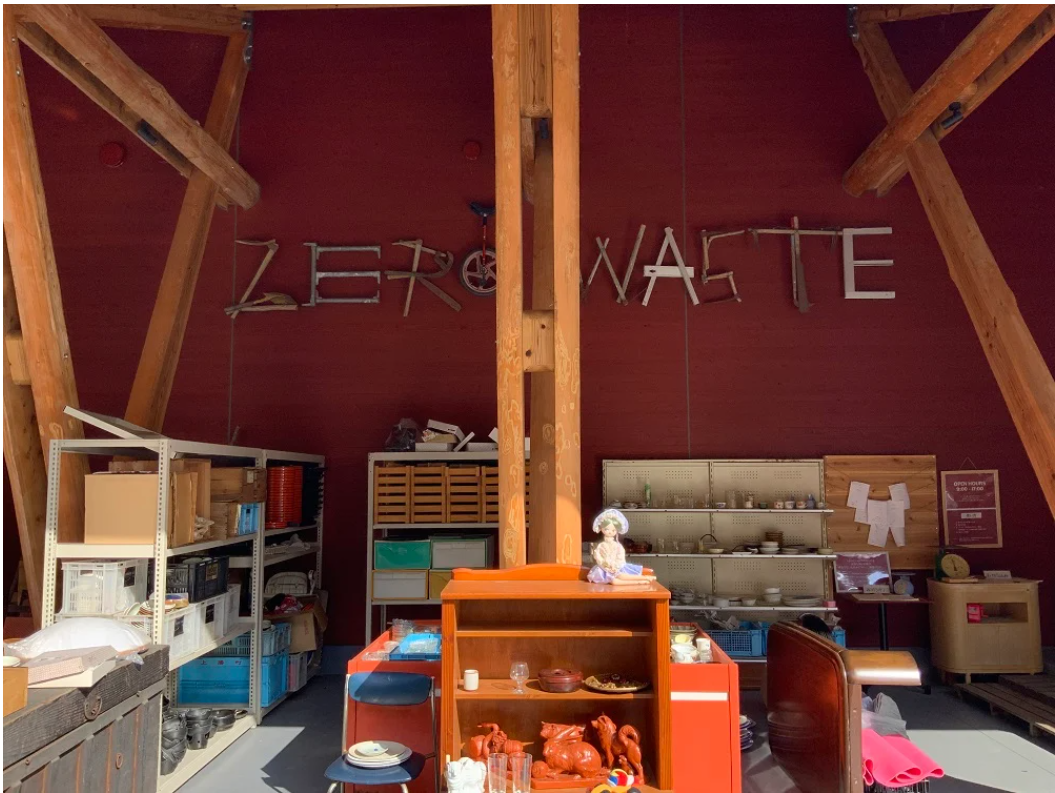
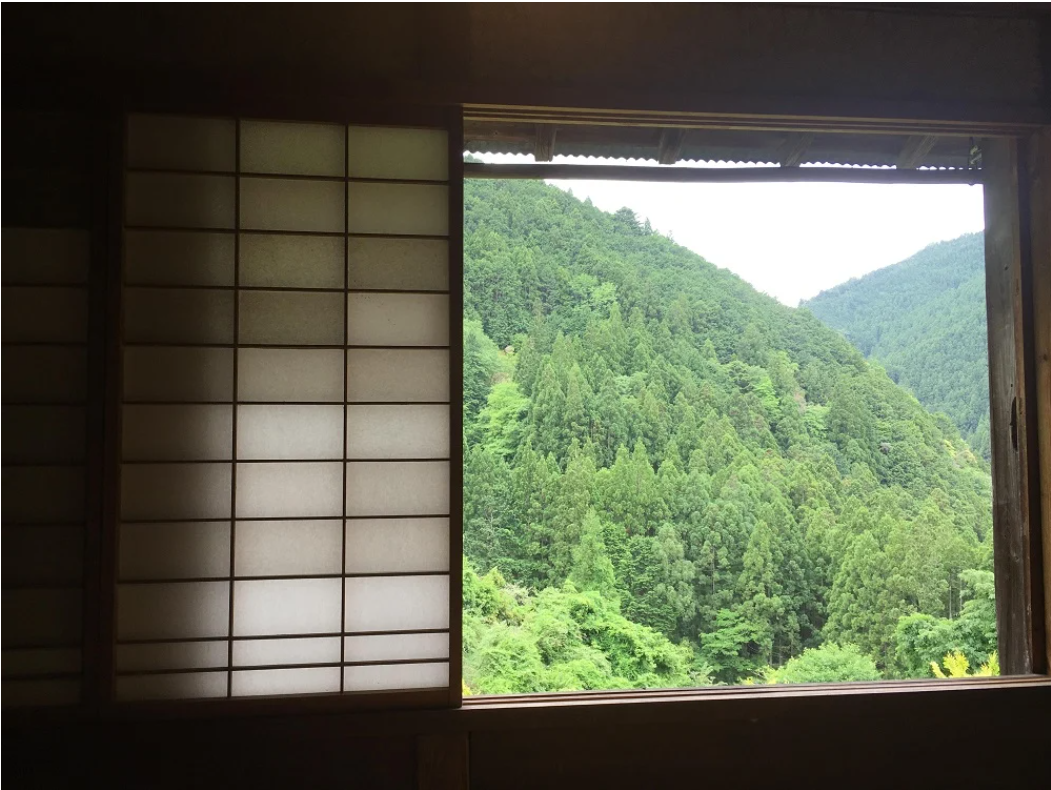
For the village of Kamikatsu, the notion of zero waste is more than just a passing trend. Hidden away in the lush cedar mountains of Tokushima prefecture, with a population hovering at around 1,500 people, Kamikatsu is the smallest village on all of Shikoku island. But what may seem small can be mighty. Back in 2003, Kamikatsu became the first village in all of Japan to declare for Zero Waste, with the lofty goal that by the year 2020 the municipality would divert one hundred percent of its waste out of landfills to be recycled.
This was no small feat given the fact the village’s historical method of waste management was to use open incineration. Up until the year 1997, the residents of Kamikatsu would throw all of their waste into a big hole in the middle of the village, where everything would be burned altogether. As you can imagine, this was quite detrimental to both the environment and to human health. In order to mitigate this problem, the local government came up with the solution of purchasing two small incinerators for the town’s use. However, just two years later the government of Japan enacted the “Law Concerning Special Measures Against Dioxins” which stipulated new regulations to the levels of dioxins permitted to be released by waste management. Suddenly the new incinerators used by the town could no longer be in service, as they did not meet the new stricter guidelines.
This left the town government in a tight bind. With no existing budget to purchase new incinerators, one option could be to ship their garbage to the next town over in order to borrow their incinerators. But shipping in itself would be costly. The solution, then, was to produce less waste to reduce the cost. Thus, the system of zero waste in Kamikatsu began.
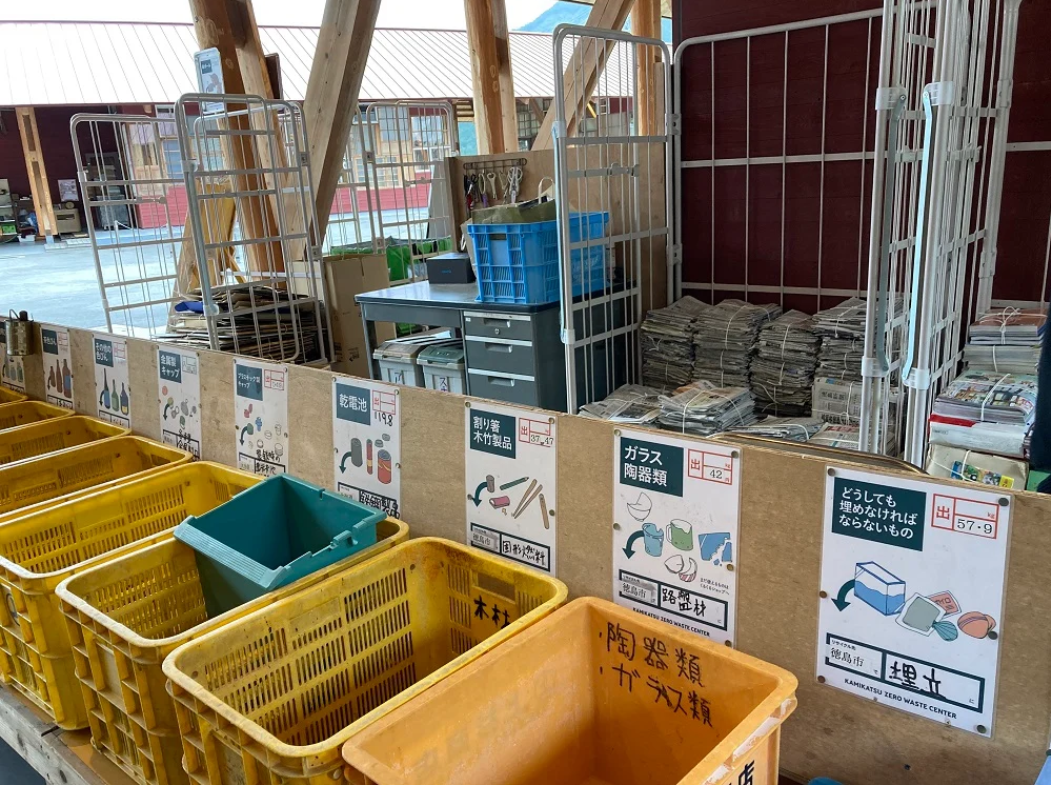
Initially back in 2001, the village’s new recycling program had thirty-five different categories of waste separation. All of these categories would be diverted out of the landfill thus decreasing the cost of waste removal. Eventually, by 2016, Kamikatsu expanded their Zero Waste program until it reached a whopping forty-five different categories of waste separation which you still find today.
What is also unique about this system is there is no garbage collection service. Each resident is responsible for bringing their own waste to the central waste collection center called the Gomi Station. For special circumstances when a resident does not own a vehicle or is no longer able to drive, the town organizes a pickup service that will go to each specified residents’ home once every two months.
From an outsider’s point of view, a system this detailed may seem like a lot of work. And it is. Not only is it necessary to separate waste into the right categories, but many categories require specific ways of managing the material such as cleaning properly first or, in the case of milk cartons, cutting them open into specified forms. But there is also a huge level of transparency in this system. At the Gomi Station, one can learn whether it costs the town money or makes the town money to get rid of a certain waste category. It also details which city in Japan the material will go to, and what it will become once it is recycled. No longer is there a mystery of what happens to waste once it gets thrown away. There is an awareness here, and with awareness comes a renewed sense of responsibility.
When it comes to the question - what is waste? - for many the answer is not so obvious, because waste is not something they often think about. Waste can be the unconscious throwing away of the paper cup from drinking combini coffee, to the casual tossing away of the plastic takeout containers your bentos came in, and don’t forget the countless plastic forks, spoons, straws, and napkins endemic to our lifestyles addicted to convenience. When we don’t think about our waste, we allow it to be everywhere yet hidden in plain sight. But we can’t solve a problem we aren’t addressing in the first place. We can’t try to become zero waste when we don’t even recognize the amount of waste we produce on a daily basis.
The Zero Waste system of Kamikatsu is, in itself, far from perfect. It requires a lot more work than just tossing something into the bin and forgetting about it. But that extra step also asks each person to stop and see the thing they are trying to throw away, to look deeper and discover what kind of materials make up its composite parts, to see it as a resource rather than as garbage. Maybe it is bothersome. But maybe we all need to be a bit more bothered. Less convenienced. Because all of this convenience we have is leading us to swim in our own plastic, to eat it, to breathe it.
Maybe Kamikatsu’s system isn’t perfect. In the end they didn’t reach their goal of zero garbage produced by 2020. Even still, the village consistently recycles an annual 80% of their waste, compared to the Japanese national average of just 20%. So maybe perfect is not what we are looking for. For starters, even just a little more awareness, a better effort in the right direction can lead to change. Maybe instead of asking for zero waste, we can start by asking ourselves how can we see the things around us less as waste, and more as a resource. As a gift, from the one home that sustains all of us.